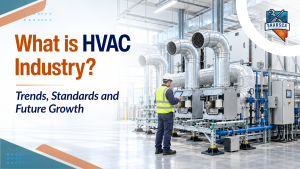
HVAC stands for Heating, Ventilation, and Air Conditioning.
Each part represents an important function:
- Heating: Raises indoor temperature when heating is required.
- Ventilation: Brings in or distributes fresh air while helping remove stale or contaminated air.
- Air Conditioning: Cools and conditions indoor air when temperatures are high.
Together, these functions help create a more comfortable and controlled indoor environment.
The term HVAC is therefore broader than air conditioning alone. Air conditioning is one part of HVAC, while heating and ventilation are also essential components.
What is the HVAC meaning?
The HVAC meaning refers to the systems and technologies used to control heating, ventilation, and air conditioning within an indoor environment.
HVAC can include a combination of:
- Heating equipment
- Air conditioning equipment
- Heat pumps
- Ventilation systems
- Ductwork
- Air filters
- Thermostats and controls
- Fans and blowers
- Indoor air quality equipment
The exact equipment used depends on the building, climate, occupancy, system design, and required indoor conditions.
How does HVAC work?
To understand how HVAC works, it helps to look at the four basic functions: heating, cooling, ventilation, and air distribution.
Heating
During colder conditions, an HVAC system can raise the temperature of indoor air using equipment such as furnaces, boilers, or heat pumps.
The system generates or transfers heat and distributes it throughout the building.
Cooling
During warmer conditions, air conditioning equipment removes heat from indoor air.
In a typical air conditioning system, refrigerant circulates through components that allow heat to be absorbed from indoor air and rejected outdoors.
Ventilation
Ventilation helps exchange indoor and outdoor air. It can help remove stale air, odors, moisture, and other unwanted contaminants while introducing outdoor air where required.
Air distribution
Once air has been heated, cooled, or conditioned, fans and ductwork can distribute it throughout different areas of a building.
This is why proper HVAC duct design and airflow are important parts of system performance. For a deeper look at this topic, see SNARSCA’s guide to duct design in HVAC.
How does an HVAC system work?
An HVAC system is not simply one machine. It can consist of multiple components working together.
A simplified process looks like this:
Thermostat → HVAC equipment → Air treatment → Air distribution → Indoor space → Return air
The thermostat or control system detects or receives information about indoor conditions. The HVAC equipment then operates as needed to provide heating, cooling, or ventilation.
Conditioned air is distributed through the building, while return air can be brought back to the system for further conditioning.
The exact process varies according to the HVAC system type and building design.
What are the main types of HVAC systems?
There are several types of HVAC systems, and each has different applications.
Split HVAC systems
A split system typically separates the indoor and outdoor components of the system.
These systems are widely used in residential applications and can provide heating and cooling depending on the configuration.
Packaged HVAC systems
In a packaged system, major components are combined into a single outdoor unit or package.
These systems can be used in certain residential and commercial applications where this configuration is appropriate.
Heat pump systems
Heat pumps transfer heat rather than simply generating it. Depending on the system and operating conditions, a heat pump can provide both heating and cooling.
SNARSCA has also covered the growing demand for heat pump technology and how this technology is becoming increasingly relevant to HVAC professionals.
Ductless HVAC systems
Ductless systems, such as mini-split systems, provide heating and/or cooling without requiring traditional ductwork throughout the building.
Variable refrigerant flow systems
VRF systems use variable refrigerant flow to provide heating and cooling to multiple zones. They are commonly associated with larger or more complex buildings where individual zone control can be useful.
Dedicated outdoor air systems
A DOAS focuses on handling outdoor ventilation air separately from other heating and cooling functions. Learn more about this specialized system in SNARSCA’s guide to DOAS HVAC meaning.
What is HVAC in air conditioning?
When people use HVAC in the context of air conditioning, they are usually referring to the broader system that manages indoor temperature and air conditions.
Air conditioning specifically focuses on cooling and conditioning air, while HVAC also includes:
Heating + Ventilation + Air Conditioning
Therefore, HVAC meaning in air conditioning is broader than simply cooling.
An HVAC system can combine multiple technologies to maintain desired indoor conditions throughout different seasons.
What is HVAC meaning in engineering?
In engineering, HVAC meaning extends beyond individual equipment.
HVAC engineering involves designing systems that can provide appropriate heating, cooling, ventilation, airflow, and environmental control for a building.
Engineers and designers may consider factors such as:
- Building size and layout
- Heating and cooling loads
- Occupancy
- Outdoor climate
- Ventilation requirements
- Airflow
- Equipment efficiency
- Ductwork
- Controls
- Indoor air quality
- Applicable codes and standards
Proper HVAC design is important because an incorrectly designed system may result in inefficient operation, poor comfort, inadequate ventilation, or unnecessary operating costs.
For readers interested in the professional side of HVAC, SNARSCA also covers the pathway to becoming an HVAC engineer.
What is the difference between HVAC and refrigeration?
HVAC and refrigeration are closely related fields, but they are not exactly the same.
HVAC primarily focuses on controlling indoor environmental conditions such as heating, cooling, ventilation, and air distribution.
Refrigeration focuses primarily on maintaining temperatures below surrounding conditions for applications such as food storage, commercial refrigeration, and industrial processes.
Many professionals and organizations use the broader term HVACR, where the R represents refrigeration.
This is why HVAC and refrigeration knowledge often overlap, particularly in areas such as refrigerants, compressors, heat transfer, controls, and system diagnostics.
Why is HVAC important?
HVAC systems have an important role in modern buildings.
Indoor comfort
HVAC systems help maintain suitable indoor temperatures across different seasons.
Ventilation
Proper ventilation can help manage indoor and outdoor air exchange and support healthier indoor environments.
Indoor air quality
Filtration, ventilation, humidity management, and other HVAC functions can influence indoor air quality.
For a more detailed explanation, see SNARSCA’s article on the role of indoor air quality in HVAC performance.
Energy efficiency
System design, equipment efficiency, controls, installation quality, and maintenance can all influence HVAC energy consumption.
Building performance
A properly designed and maintained HVAC system can contribute to reliable building operation and occupant comfort.
Why is HVAC maintenance important?
Understanding the HVAC meaning is only the first step. HVAC systems also require appropriate maintenance to continue operating effectively.
Depending on the equipment, maintenance may include:
- Inspecting system components
- Cleaning or replacing filters
- Checking electrical connections
- Inspecting refrigerant-related components
- Checking airflow
- Examining controls
- Identifying unusual system operation
- Performing required preventive maintenance
Regular professional maintenance can help identify developing issues before they become more significant problems.
Why is HVAC training important?
HVAC systems involve mechanical, electrical, refrigeration, controls, airflow, safety, and other technical considerations.
As equipment and technology evolve, HVAC professionals need opportunities to develop and update their skills.
An HVAC technician training program can introduce students and new professionals to foundational concepts before they progress into hands-on experience and specialized certifications.
SNARSCA’s HVAC technician training program guide explores training and career development in greater detail.
Professionals can also explore SNARSCA’s HVAC education resources for additional education and industry opportunities.
What does the future of HVAC look like?
The HVAC industry continues to evolve as technology, efficiency requirements, building designs, and environmental considerations change.
Some areas shaping the industry include:
- Smart HVAC controls
- Connected equipment
- Heat pump technology
- Energy-efficient systems
- Advanced diagnostics
- Indoor air quality
- New refrigerant technologies
- Building automation
- Data-driven maintenance
For HVAC professionals, this means technical knowledge increasingly needs to be combined with an understanding of newer digital technologies and changing industry practices.
Professionals interested in industry developments can also explore SNARSCA’s HVAC design trends article.
Conclusion
The HVAC meaning is straightforward: HVAC stands for Heating, Ventilation, and Air Conditioning. However, the systems represented by this term can range from relatively simple residential equipment to highly sophisticated commercial and industrial installations.
Understanding what HVAC stands for, how HVAC systems work, the different types of systems, and the role of HVAC professionals provides a foundation for understanding the wider HVAC industry.
As technology and building requirements continue to evolve, HVAC professionals will need to keep developing their technical knowledge and skills. Education, practical experience, professional development, and industry engagement can all contribute to a stronger HVAC workforce.
For HVACR professionals, students, contractors, and industry participants, SNARSCA provides an opportunity to connect with the wider HVACR community through education, networking, mentorship, events, and professional resources.
Related FAQs
Q
What is HVAC?
HVAC stands for Heating, Ventilation, and Air Conditioning. It refers to systems and technologies used to manage indoor temperature, ventilation, airflow, and comfort.
Q
What does HVAC stand for?
HVAC stands for Heating, Ventilation, and Air Conditioning.
Q
What is HVAC meaning?
The HVAC meaning refers to the systems and technologies used for heating, ventilating, and air conditioning buildings and indoor spaces.
Q
How does HVAC work?
HVAC systems work by heating, cooling, ventilating, and distributing air throughout a building. Different equipment and components work together depending on the type of HVAC system.
Q
How does an HVAC system work?
An HVAC system uses equipment, controls, fans, and sometimes ductwork to condition and distribute air. Depending on the system, it can heat, cool, ventilate, filter, or otherwise condition indoor air.
Q
What are the types of HVAC systems?
Common types include split systems, packaged systems, heat pumps, ductless systems, VRF systems, and specialized systems such as dedicated outdoor air systems.
Q
Is HVAC the same as air conditioning?
No. Air conditioning is one component of HVAC. HVAC stands for heating, ventilation, and air conditioning, so the term covers a broader range of indoor environmental systems.
Q
What is HVAC in engineering?
HVAC in engineering refers to the design and application of systems that control heating, cooling, ventilation, airflow, and indoor environmental conditions in buildings.
Q
What is the difference between HVAC and refrigeration?
HVAC primarily focuses on heating, ventilation, air conditioning, and indoor environmental control, while refrigeration primarily focuses on maintaining temperatures below surrounding conditions for specific applications.
Q
Is HVAC a good career?
HVAC can be a suitable career for people interested in technical, mechanical, electrical, and hands-on work. Career opportunities can include installation, service, maintenance, engineering, controls, refrigeration, and other specialized areas.