Your HVAC system is one of the most important investments in your home, providing reliable heating and cooling throughout the year. Like any major appliance, however, it has a limited lifespan. Understanding your HVAC life span can help you plan for maintenance, avoid unexpected breakdowns, and make informed decisions about repairs or replacement.
In this guide, we’ll explore the life expectancy of HVAC systems, the factors that influence their longevity, and practical tips to help you maximize your investment.
What is the Average HVAC System Lifespan?
The average HVAC life span typically ranges between 15 and 20 years, although the exact lifespan depends on the type of equipment, usage patterns, climate, and maintenance.
Here’s a general overview of the average life of HVAC systems:
|
HVAC Equipment |
Average Lifespan |
|
Central Air Conditioner |
15-20 years |
|
Gas Furnace |
15-20 years |
|
Heat Pump |
10-15 years |
|
Ductless Mini-Split |
15-20 years |
|
Thermostat |
10-15 years |
|
Air Handler |
15-20 years |
While these figures provide a useful benchmark, proper care can significantly extend the lifespan of an HVAC system.
What Factors Affect HVAC Life Expectancy?
Several factors determine the HVAC life expectancy of your system.
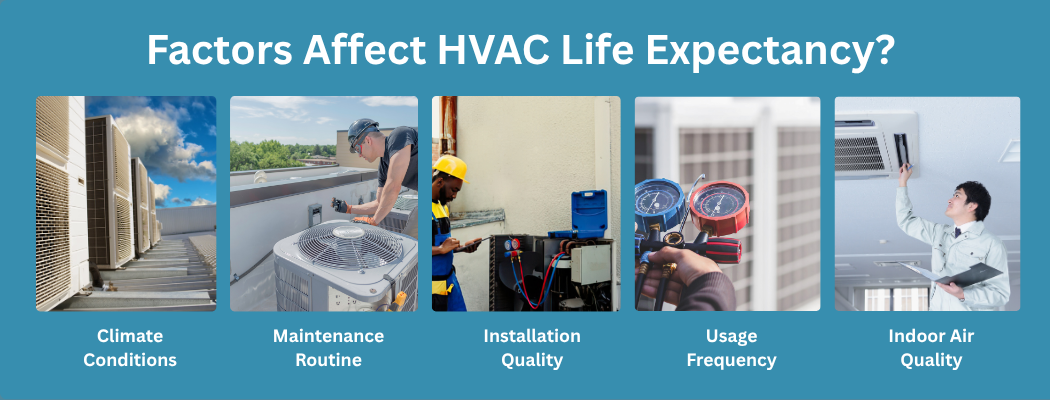
Climate Conditions
Homes located in regions with extreme temperatures place more demand on HVAC systems. Continuous operation during hot summers or freezing winters increases wear on components and may reduce the average HVAC lifespan.
Maintenance Routine
Routine maintenance is one of the biggest factors affecting the life expectancy of an HVAC system. Dirty filters, clogged coils, and neglected components force the system to work harder, shortening its useful life.
Installation Quality
Even premium HVAC equipment can underperform if installed incorrectly. Improper sizing, poor airflow design, or faulty ductwork may significantly reduce the lifespan of an HVAC unit.
Usage Frequency
A system running year-round naturally experiences more wear than one used seasonally. Heavy usage impacts the average life of HVAC units over time.
Indoor Air Quality
Dust, pet hair, pollen, and airborne contaminants accumulate inside the system, reducing efficiency and increasing strain on internal components.
How Long Should an HVAC System Last?
Many homeowners ask, “How long should HVAC last?”
A properly installed and professionally maintained system should comfortably operate for 15 to 20 years. Some systems even exceed 20 years with consistent maintenance and timely repairs.
If you’re wondering how long should a new HVAC system last, modern high-efficiency systems are designed with improved technology and durable components that can provide reliable service for two decades under ideal conditions.
Signs Your HVAC System May Be Reaching the End of Its Lifespan
As equipment ages, performance gradually declines. Watch for these common warning signs.
Increasing Energy Bills
Older systems lose efficiency, requiring more electricity or fuel to maintain comfortable temperatures.
Frequent Repairs
If repair costs continue to increase each year, replacement may become more cost-effective than ongoing maintenance.
Uneven Heating or Cooling
Rooms that remain too hot or too cold may indicate aging equipment struggling to distribute air effectively.
Strange Noises
Grinding, banging, rattling, or squealing sounds often signal worn components that require professional inspection.
Poor Indoor Comfort
Humidity issues, inconsistent temperatures, or weak airflow are common symptoms of an aging HVAC system.
How to Extend Your HVAC Life Span?
The good news is that you can significantly improve the lifespan of your HVAC system with preventive care.
Replace Air Filters Regularly
Dirty filters restrict airflow and increase system strain. Most homeowners should replace filters every 1 to 3 months, depending on usage and indoor conditions.
Schedule Annual Professional Maintenance
Professional tune-ups help identify minor issues before they become expensive repairs.
A maintenance visit typically includes:
- Cleaning coils
- Inspecting electrical components
- Checking refrigerant levels
- Lubricating moving parts
- Testing system performance
- Ensuring safe operation
Annual servicing helps maximize your HVAC average lifespan while maintaining peak efficiency.
Keep Outdoor Units Clean
Leaves, dirt, grass clippings, and debris can restrict airflow around outdoor condensers.
Maintain at least 2 feet of clearance around the unit for optimal performance.
Seal Air Leaks
Poor insulation and air leaks force HVAC systems to work harder.
Weatherproofing doors, windows, and ductwork reduces unnecessary workload and improves efficiency.
Use a Programmable or Smart Thermostat
Smart thermostats reduce unnecessary runtime by automatically adjusting temperatures based on occupancy and schedules.
Less runtime means less wear on critical components.
Don’t Ignore Small Repairs
Minor issues like unusual noises or reduced airflow can quickly develop into major failures if left untreated.
Addressing problems early often extends the average life of HVAC systems.
What is the Useful Life of an HVAC System?
The useful life of an HVAC system refers to the period during which it operates efficiently and economically.
While equipment may continue functioning beyond 20 years, efficiency usually declines significantly after the expected service life. Older systems often consume more energy, require frequent repairs, and may no longer provide consistent comfort.
For many homeowners, replacing an outdated system with a modern energy-efficient model can reduce operating costs while improving indoor comfort.
Does Every HVAC Component Have the Same Lifespan?
No. Individual components often wear out at different rates.
For example, the HVAC capacitor lifespan typically ranges between 10 and 20 years, depending on electrical demand, climate, and maintenance.
Other parts such as contactors, motors, blower fans, and thermostats may also require replacement during the overall life of the system. Replacing individual components is often far less expensive than replacing the entire HVAC unit.
Repair or Replace an Aging HVAC System?
Choosing between repair and replacement depends on several factors.
Repairing may be the better option if:
- The system is under 10 years old.
- Repairs are relatively inexpensive.
- Energy efficiency remains acceptable.
- Maintenance history is good.
Replacement is often recommended if:
- The system is over 15-20 years old.
- Repair costs continue increasing.
- Energy bills have become significantly higher.
- Comfort levels have declined.
- Major components have failed.
A qualified HVAC technician can evaluate your equipment and recommend the most cost-effective solution.
Frequently Asked Questions
What is the average life expectancy of an HVAC system?
Most residential HVAC systems last between 15 and 20 years with proper installation and routine maintenance.
How can I increase my HVAC life span?
Regular filter changes, annual professional maintenance, clean outdoor units, sealed ductwork, and smart thermostat usage all help extend system life.
How long should a new HVAC system last?
Modern systems generally last 15-20 years, though high-quality equipment maintained properly may last even longer.
Is it worth repairing a 20-year-old HVAC system?
In many cases, replacing a 20-year-old system is more cost-effective because newer models offer improved energy efficiency, reliability, and lower operating costs.
Conclusion
Understanding your HVAC life span helps you make smarter maintenance and replacement decisions. While the average life expectancy of an HVAC system is around 15 to 20 years, proper installation, routine maintenance, and prompt repairs can help maximize its performance and longevity.
Whether your system is brand new or approaching the end of its service life, investing in preventive maintenance today can save you money, improve comfort, and reduce the likelihood of unexpected breakdowns in the future.