High monsoon humidity forces your HVAC system to work twice as hard to dehumidify indoor air, leading to common problems like condensate water leaking, evaporator coil freezing, mold growth, and reduced cooling performance.
Regular HVAC system maintenance, monthly air filter replacements, voltage testing, and drain line cleaning preserve high energy efficiency and prevent costly electrical motor malfunctions during heavy rain.
HVAC System Meaning and How It Works During High Humidity
When contractors talk about an HVAC system, they mean Heating, Ventilation, and Air Conditioning. But during the monsoon, you can practically drop the “H”- it’s all about cooling and humidity control.
Here’s how an HVAC system works when the rain starts pouring: cold liquid refrigerant circulates inside your indoor evaporator coil. Your blower fan pulls warm, humid room air across those chilled metal fins. As the warm air hits the cold coil, water vapor condenses instantly – just like sweat on an ice-cold glass of water on a hot afternoon. That liquid drips down into a drain pan and runs outside through a PVC pipe.
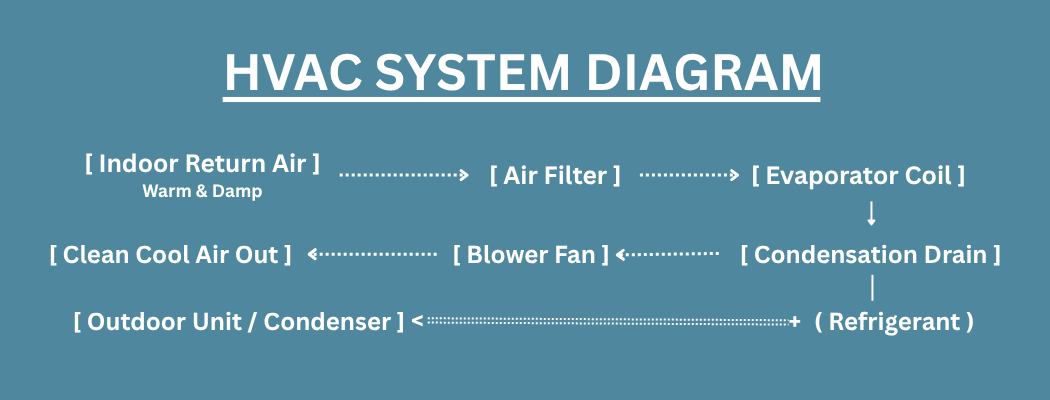
When monsoon weather elevates outdoor relative humidity above 75%, your cooling equipment shifts from simple sensible cooling (lowering temperature) to heavy latent cooling (removing water vapor from the air). Reviewing a standard HVAC system wiring diagram schematics shows how humidity sensors, relay switches, and run capacitors modulate compressor run-times. High ambient moisture strains electrical terminals and contactor points, making pre-monsoon electrical inspection essential for home safety and equipment protection.
6 Common Monsoon HVAC System Issues and Malfunctions
Heavy downpours and thick humidity trigger specific mechanical and electrical failures. Whether you have a split unit, central heat pump, or window AC, watch out for these frequent HVAC system types issues:
1. Water Leaking from Clogged Drain Lines
By far the most common problem is an HVAC system leaking indoors. High humidity forces your system to drain up to 20 gallons of water daily. Algae, dust, and fungal slime quickly build up inside the narrow drain pipe. When sludge blocks the line, water backs up and overflows out of the indoor pan onto your floor or ceiling.
2. Reduced Cooling and Frozen Coils
If your HVAC system is not cooling, don’t immediately assume you’re out of gas. Moist air combined with a dirty air filter restricts airflow across the indoor coil. Without steady air moving over it, the cold refrigerant causes trapped condensation to freeze into a solid block of ice.
3. Loud Electrical Noise and Capacitor Overload
Hear a strange HVAC system noise? A sharp clicking sound on startup or a heavy buzzing from the outdoor unit usually points to a weak capacitor or moisture inside the electrical disconnect box. Ignoring an early HVAC system malfunction warning sound almost always ends up frying the compressor motor windings.
4. Mud and Debris Silt in the Condenser Unit
Heavy rain splashes garden soil, leaves, and mud into the outdoor cabinet. Dirty condenser coils can’t dump heat outside efficiently. That pushes system head pressure into dangerous territory, spiking your electric bill.
5. Mold Spores and Musty Air in Ductwork
Damp air trapped inside dark air ducts is a recipe for mold growth. If your AC smells like a damp basement when it kicks on, mildew spores are circulating through your living room.
6. Humidity Sensor and Thermostat Short-Cycling
Extreme humidity interferes with electronic sensors. When sensors misread indoor moisture, your system turns on and off every few minutes (short-cycling), wearing out internal parts fast.
HVAC System Maintenance and Step-by-Step Testing Checklist
Staying ahead of monsoon moisture isn’t complicated, but you need a routine. Here’s a practical HVAC system maintenance checklist to protect your equipment:
|
Maintenance Task |
How Often |
What It Does |
| Air Filter Swap | Every 30 Days | Keeps airflow strong and stops ice forming on coils |
| Drain Line Flush | Every 2 Weeks | Clears algae buildup and stops ceiling leaks |
| Voltage & Capacitor Check | Pre-Monsoon | Catches weak electrical parts before motors burn out |
| Outdoor Coil Wash | Monthly in Rain | Washes off mud splash so heat escapes easily |
| Duct Sanitization | Once a Year | Kills mildew spores and removes musty smells |
Simple Testing Procedures You Can Do Yourself
Basic HVAC system testing doesn’t require an engineering degree:
- Thermostat Test: Turn your thermostat down 5 degrees below room temperature. The outdoor unit should kick on smoothly within 60 seconds without buzzing.
- Temperature Split Check: Hold a thermometer at your return grille, then at a supply vent. The supply air should be 16°F to 20°F cooler than the air going in.
- Drain Check: Walk outside while the AC is running. You should see a steady drip from the PVC drain pipe. No water? Check indoors for a leak.
Why HVAC System Balancing Matters?
Damp ductwork can sag or leak air over time. Professional HVAC system balancing uses airflow meters and duct dampers to make sure every room gets equal cooling, eliminating sticky, humid pockets in back bedrooms.
Equipment Lifespan, Warranty Rules, and Replacement Costs
Homeowners frequently ask how long do HVAC systems last when exposed to severe seasonal monsoon weather and high humidity environments.
How Long Should an HVAC System Last?
Under normal operating conditions, a standard residential cooling unit has an expected lifespan of 12 to 15 years. However, high humidity, salty air, and flood risk can degrade unmaintained outdoor units within 7 to 10 years. Maintaining your manufacturer HVAC system warranty requires documented annual professional maintenance visits from licensed technicians.
Cost Comparison Matrix: Cleaning vs Repairs vs Full Replacement
|
Service Category |
Average Cost Range |
Key Factors Influencing Cost |
| HVAC System Cleaning Cost |
$150 – $300 |
Deep coil chemical wash, drain line flush, blower wheel cleaning |
| Minor Electrical Repairs |
$180 – $450 |
Capacitor replacement, contactor switch installation, thermostat rewiring |
| Compressor / Motor Replacement |
$1,200 – $2,500 |
Out-of-warranty motor replacement, refrigerant recharge service |
| Complete System Replacement |
$4,500 – $9,000 |
Varies by HVAC system size (1.5 Tons to 5.0 Tons capacity) |
Calculating your unit’s HVAC system energy efficiency rating (SEER2) helps determine whether replacing an old, inefficient 10 SEER unit with a modern 16+ SEER2 system will pay for itself through lower monthly electric bills.
Conclusion
Navigating the monsoon season doesn’t have to mean dealing with frequent breakdowns, soaring electric bills, or indoor humidity headaches. While heavy rains and dense moisture push your HVAC system to its absolute limits, forcing it to shift from simple cooling to heavy latent dehumidification, proactive care makes all the difference.
By sticking to a consistent maintenance routine, keeping your condensate lines clear, monitoring electrical components, and catching minor issues early, you can protect your equipment from premature wear. Ultimately, a well-maintained HVAC system ensures your home stays dry, cool, and comfortable all season long, while extending the lifespan of your investment for years to come.
Related FAQs
Q How does humidity affect my HVAC system efficiency?
High humidity forces the compressor to run longer cycles to condense moisture out of the air. This increases monthly electricity consumption by 15% to 25% during peak monsoon months.
Q Why is water leaking from my indoor AC unit during heavy rain?
Indoor water leakage is almost always caused by a clogged condensate drain line or an unlevel drain pan. High humidity generates excess water that overflows when algae blocks the pipe.
Q What is the average lifespan of an HVAC unit in rainy climates?
While standard units last 12-15 years, heavy coastal or monsoon humidity can reduce lifespan to 8-10 years if maintenance is neglected.
Q How much does a professional HVAC system cleaning cost?
A professional coil and drain line cleaning typically ranges from $150 to $300, depending on unit accessibility and severity of dirt buildup.